Solemnity of the Assumption of the Blessed Virgin Mary (2020)

Today, with the universal Church, we affirm our belief that Mary, the Mother of God is the perfect model of Christian life; who was preserved from the corruption of the grave and who is the Queen of Heaven and Earth. On this Solemnity, we are also reminded that our destiny lies beyond the grave and each day we are being called to eternity. For that reason we said these words in our Opening Prayer: “Always attentive to the things that are above, may we merit to be sharers of Mary’s glory.” We cannot assume that we will go to heaven. We must strive daily to cooperate with the Lord’s grace so that we may be prepared on the day He calls us to Himself. Mary shows us the way: Like her, we must, “proclaim the goodness of the Lord and rejoice in God our Savior. Like her, we must with profound trust say daily: “Let it be done to me according to your word.” In other words, as humble and faithful disciples our souls must magnify---not ourselves, but the One is Lord, the Son of God, the Son of Mary. How blessed are we that from the Cross he gave Mary to us as our Mother to guide us on our earthly journey and to the ultimate goal for which we long.  Just yesterday we celebrated the Feast of St. Maximilian Kolbe who offered us this sound advice: “We should let ourselves be guided by Mary and rest quiet and secure in her hands. She will watch out for us; provide for us; answer our needs of body and spirit and dissolve all our difficulties and worries” Mary, Queen of Heaven and Earth, pray for us today and always. Amen • AE

Solemnidad de Asunción 

de la Santísima Virgen María (2020)


La fiesta de hoy, por las lecturas mejor proclamadas que nunca, debería contagiarnos esperanza. La Asunción es un grito de fe en que es posible la salvación y la felicidad: que es verdad el programa salvador de Dios. Es una respuesta a los pesimistas, que todo lo ven negro. Es una respuesta al hombre materialista, que no ve más que los factores económicos o sensuales: algo está presente en nuestro mundo que trasciende nuestras fuerzas y que lleva más allá. La Asunción de María Santísima es la prueba de que el destino del hombre no es la muerte, sino la vida. Y, además, que es toda la persona humana, alma y cuerpo, la que está destinada a la vida total, subrayando también la dignidad del cuerpo humano. En María Santísima ya ha sucedido. En nosotros no sabemos cómo y cuándo sucederá, pero tenemos plena confianza en Dios: lo que ha hecho en ella quiere hacerlo también en nosotros. Cada vez que participamos en la Eucaristía, elevamos a Dios nuestro canto de alabanza, exactamente como hizo la Santísima Virgen con su Magníficat. La plegaria eucarística es como un Magníficat prolongado por la historia de amor y salvación que va construyendo Dios. Cada vez que participamos en la Eucaristía recibimos como alimento el Cuerpo y la Sangre del Señor Resucitado de quien nos había dicho "Quien come mi Carne y bebe mi Sangre, tiene vida eterna y yo le resucitaré el último día". La Eucaristía es como la semilla y la garantía de la vida inmortal para los seguidores de Jesús. Por tanto, de alguna manera, también nosotros estamos recorriendo el camino hacia la gloria, como la que ya conseguido María, la Madre. Cada Eucaristía nos acerca al misterio de la Asunción. Si la celebramos bien, con amor y devoción, vamos pues por buen camino • AE


This year, as the celebration falls on a Saturday, the United States Conference of Catholic Bishops has decided that the solemnity of the Assumption of the Virgin Mary (sadly) is not a holiday of obligation.

Fr. Agustin will celebrate the holy Mass at 8.00 a.m. at Our Lady of Grace Catholic Church.


Twentieth Sunday in Ordinary Time (Cycle A)

So, what is the Liturgy of the Church trying to say to us by relating the dialogue that Jesus had with the Canaanite woman? And what does all this have to do with us, people of 21st century? It has everything to do with us. The readings today are about inclusion, the call to One Church, to One Kingdom, a kingdom that refuses to exclude those seeking God. The Canaanite woman wins healing for her daughter by showing Jesus her faith in Him. She even humbles herself when He said that the gifts of the Messiah, the food of the Jewish people, should not be shared with the dogs, the Gentiles.  She responds that even the dogs eat the scraps that fall from the table, a common practice in meals where there are no utensils, just pieces of bread that are dipped into the stew pot, then dropped onto the floor rather than be re-dipped into the pot. It is clear from the Gospel that the faith of the gentiles, their openness to the wonders of God, has earned them a place at His table, the Banquet of Life. It would take time, but the Church came to a deep understanding that there is no right side or left side of the Church, nor are there people who are more worthy of the promise of Christ than others. The Church realized that it was universal, it was Catholic, the word that you know means universal. The Church is made up of people from various backgrounds, but all part of One Church.  The Catholic Church is not just European, nor is it just American. The Catholic Church is also Asian, South American, African, Australian etc.  All are part of the one Church called to accept the spiritual, called to eternal life. Think of the Church as a tapestry with various colors of threads all forming one picture, or as a mosaic with various different tiles all forming a great work of art. The world needs us to be Catholic.  Our country needs us to be Catholic. In the First Eucharistic Prayer for Various Needs, entitled The Church on the Path of Unity, we have the petition: “In a world torn by strife may your people shine forth as a prophetic sign of unity and love”. Recent events in our country are calling us more than ever to be this prophetic sign of unity amid our diversity. The world needs to see one body of people with diverse backgrounds all forming that tapestry, that mosaic, that is the People of God. The world and our country need to experience in the Catholic Church the prophetic sign that diverse people can become one unified person.  We have to be a sign for our country that our strength comes from the bond of love that does not accept any form of exclusion of any peoples. The world needs to witness our living out what we proclaim with our Creed: We are One, Holy Catholic and Apostolic. Who belongs here?  Who belongs in the Church?  All people belong here.  All people are called to form Church.  May our country see in the unity of the Catholic Church a prophetic sign that diverse people can unite in love • AE


XX Domingo del Tiempo Ordinario (Ciclo A)


La liturgia de este domingo podría ayudarnos a renovar nuestra vida de oración. El mundo agitado que vivimos muchas veces no nos deja espacio para recoger nuestra alma, quedarnos en silencio, y alabar a Dios. Nos encontramos en cierto sentido "extrovertidos", desparramados por las cosas y los acontecimientos. No somos capaces de reservar algunos minutos para la oración personal. ¿Qué puedo hacer hoy para hablar con mi Señor? ¡La gran pregunta! Podríamos hacerlo diciendo con labios nuevos las oraciones que hacíamos al levantarnos y al ir a descansar: Dulce Madre, Oh Señora mía, Acordaos, Ángel de mi guarda. Lo podemos hacer al bendecir la mesa y pedir a Dios por nuestra familia y nuestros hijos. ¡Qué experiencia tan profunda la de la familia que reza unida! ¡Cómo se queda grabada en la mente de los niños las oraciones recitadas al lado de la madre o del padre! Reavivemos nuestra fe en la oración. Impongámonos ese pequeño gran ejercicio que supone detenerse unos cuantos minutos cada día en silencio interior y en diálogo profundo con el Señor Jesús. Nuestra alma ganará en paz, en esperanza, en fortaleza para enfrentar los avatares de la vida y vendrá la certeza de que el amor no se detiene ante las dificultades. Es verdad, el amor no conoce la dilación, no conoce los obstáculos. El amor está en continua actitud de donación y de sacrificio en bien de la persona amada. Esto es lo que escuchamos hoy en la voz de la mujer cananea: su petición a Jesús está toda en favor de su hija • AE

Fr. Agustin’s Schedule for August 16, 2020.

Twentieth Sunday In Ordinary Time

9.00 a.m. English Mass

@ St. Peter Prince of the Apostles Catholic Church


11.00 a.m. English Mass

@ St. Peter Prince of the Apostles Catholic Church


Nineteenth Sunday in Ordinary Time (Cycle A)

We learn from Genesis that on the first day God created the heavens and earth and then created light to overcome the darkness. On the second day, we learn that the earth was covered in water. God created land and separated the seas from the land. He conquered the seas. To the ancient people, the seas represented chaos. Fishermen and sailors, then, as well as now, know all too well the sudden turmoil caused by rough waters. That is chaos. But God conquered the seas. And Jesus walked on the water. He continues to walk on water. He walks on the chaos of our lives. That is one of the messages of today’s Gospel reading. No matter what chaos there is in the world and in our lives, Jesus walks on it. Jesus conquers the chaos that is caused by things that our beyond our control. Life itself is chaotic. Just when all is seems to be calm, a loved one suddenly dies. All of us have experienced this. We did not cause the chaos, but we do suffer from it. Jesus conquers the chaos, even that chaos which we ourselves cause in our lives. Many of us have made bad choices. Many of us have sinned. Many of us suffer the results of our sins or the sins of others.  For example, a person finally recognizes that he has gotten into a relationship which is destroying his family and destroying himself. He returns to his family, but the damage has been done. He and his family suffer the results of his sins. It makes no difference whether we caused the chaos or whether we suffer from the chaos caused by others. Jesus still walks on the water. He conquers the chaos. Then, do you know what he does? Well, full of mercy and tenderness He calls us to walk out onto the chaos and walk towards him.  “Come Peter.”  And Peter walked on the water.  At least for a bit. That is what Jesus does for us all. He walks on the chaos of our lives, and then calls us to come and join him. He gives us the strength to walk on water. And what if we fail? What if we blink, and sink like Peter did?  “Don’t be afraid!”, the Lord says. He is there to reach down and lift us out of the water, out of the chaos, just as he lifted Peter out of the water, out of the chaos of his life. The Lord knows that we are not saints, not yet anyway. He knows that we are weak. He accepted Peter, that loud lout, that well-meaning coward, and turned him into the Rock of the Church. He takes us as we are and walks with us on the water. He only asks us to have the courage to put our faith in Him. He gives us the strength to join Him in conquering the chaos. Where is the chaos in your lives, in my life? Is it sickness or death? Is it in some addiction? Is it turmoil in your marriage or your family? Where have the seas raised up to chaotic dimensions? Wherever that chaos is, please remember, that there is nothing, no chaos that is too great for Jesus to conquer. And there is nothing too devastating for us to conquer with Him. He walked on the waters, and He calls us to walk with Him • AE 

 ...

XIX DOMINGO DEL TIEMPO ORDINARIO (CICLO A)


Por qué has dudado? ¡Difícil responder a esta pregunta del Señor! A veces las más hondas convicciones se nos desvanecen, y los ojos del alma se nublan sin saber exactamente por qué. Principios que hasta entonces eran inconmovibles comienzan a tambalearse y se despierta la tentación de abandonarlo todo. La vida es así. Otras veces, el misterio de Dios se nos hace agobiante y abrumador. La última palabra sobre la vida se nos escapa, ¡qué dificil abandonarse al misterio! La razón sigue buscando insatisfecha una luz clara que no encuentra ni podrá jamás encontrar. No pocas veces, la superficialidad y ligereza de nuestra vida cotidiana y el culto secreto a tantos ídolos y a tantos apegos nos sumergen en largas crisis, con la sensación de haber perdido realmente a Dios. Además, nuestro propio pecado quebranta nuestra fe. Si somos sinceros, hemos de confesar que hay una distancia enorme entre el creyente que profesamos ser y el creyente que somos en realidad. ¿Y entonces? ¿Qué hacer al constatar en nosotros una fe a veces tan frágil y vacilante? Lo primero sería quizá no desesperar, ni asustarse al descubrir en nosotros dudas y oscuridad. Ese es el punto de partida. La búsqueda de Dios se vive casi siempre en la inseguridad, en el riesgo. A Dios lo buscamos a tientas. En realidad, la fe genuina sólo puede aparecer como duda superada. Lo que importa es aceptar el misterio de Dios con el corazón abierto, sencillo, sin esperar a que nuestros interrogantes y dudas se encuentren resueltos para vivir de cara a Él. Por eso es tan importante es saber gritar como Pedro, constantemente "¡Señor, sálvame!"; saber levantar hacia Dios nuestras manos vacías, y no sólo como gesto de súplica, sino también como entrega confiada de quien se sabe pequeño, ignorante y necesitado de salvación. La fe, qué duda cabe, es caminar sobre agua, pero con la posibilidad de encontrar siempre esa mano que nos salva del hundimiento total, la mano fuerte y amorosa del Señor Jesús • AE


Fr. Agustin’s Schedule for August 9, 2020.

Nineteenth Sunday in Ordinary Time.


Sunday August 9, 2020.

8.30 a.m. English Mass

@ Our Lady of Grace Catholic Church

(Outdoors mass)


10.30 a.m. English Mass

@ Our Lady of Grace Catholic Church

(Outdoors mass)


12.00 p.m. English Mass

@ Our Lady of Grace Catholic Church

(Main church)

Celebration of the Sacrament of Confession (Summer 2020)

Confession is the sacrament of the tenderness of God, his way of embracing us (Pope Francis)

Dear parishioners and fellow friends who follow this blog: the celebration of the sacraments takes place regularly in our three communities. The Sacrament of Confession is usually celebrated on Saturdays one hour before the vigil mass, but not limited to this schedule. I am available to celebrate the Confession at any time that is appropriate and prudent at any of our three communities: Our Lady of Grace, St. Peter Prince of the Apostles and Our Lady of Sorrows. The best way to organize the day and time that is most convenient for both parties is through an e-mail. So, please feel free to contact me at: agusestrada@gmail.com and for sure I will set up the best time for both of us. You can share this information with whoever you think may need this sacrament • AE

...

Queridos parroquianos y amigos que siguen este blog: La celebración de los sacramentos se lleva a cabo de manera regular en nuestras tres comunidades. El Sacramento de la Confesión se celebra todos los sábados una hora antes de la misa de la tarde, pero no está limitado a ese horario; yo estoy disponible para oír confesiones en cualquier momento que sea oportuno y prudente en cualquiera de las tres comunidades parroquiales de las que soy vicario: Our Lady of Grace, St. Peter Prince of the Apostles y Our Lady of Sorrows. La mejor manera para encontrar un día y una hora que sea conveniente es a través del correo electrónico. Por lo tanto, si necesitas recibir el Sacramento de la Confesión contáctame a través de mi e-mail a: agusestrada@gmail.com. Puedes compartir esta información con quien tú creas que puede necesitar este sacramento • AE

Eighteenth Sunday In Ordinary Time (Cycle A)

Anguish, distress, persecution, famine, nakedness, peril, and finally, the sword, which means persecution, hostility… All this is mentioned by Saint Paul in the second reading today; It seems that he is describing the time we are now living. But the apostle is positive, in fact (he is) very positive: he is giving us the key to understand that difficult times can be overcome when we have a love relationship with Christ: In all these things -he says- we conquer overwhelmingly through him who loved us. We conquer overwhelmingly: this is the point! This Sunday the entire liturgy of the Word is a great invitation to meditate about Christian hope, and about the love that God has for us. For each one of us. An invitation to be sure that the foundation of our safety, the foundation of our faith, is the love, and presence and company of our Lord Jesus Christ. It is precisely because Jesus walks with us on the path that we can move forward So, what will happen in the fall, when flu season comes? What is going to happen to schools? What is going to happen with the loans, and the finances, and the projects and all that stuff? What is going to happen to me? It is normal for all these questions and many more to come to mind; and with them, also a dose of worries, anxiety and even anguish; it is ok! We are humans; we are not angels; So, NOW is the time to ask myself: Where do I have my heart set? What is the foundation of my faith? Even more: How is my relationship with Jesus? Do I REALLY know the one I usually say is my Lord and my God? My brother, my sister: We have precious time ahead to exercise our faith more deeply, to improve our relationship with Jesus, to make our spiritual life more solid; to grow in good habits, in virtues…. Being a Christian goes beyond attending mass on Sunday and writing a check to help the parish; That is great, but we can do better, much better. the Lord is waiting for us to look for him but with a loving heart. That is a relationship between two people: Love from both sides. Jesus knows our sufferings, our concerns; nothing that happens to us is indifferent; but he needs us to open the door of our hearts, and that we trust more in his grace than in our own capabilities or our own resources. In other words: To be a Christian is to be like Christ, but to be like Christ we have to know him. So, I ask you, and I ask myself: How many biographies of Jesus have you read besides the Book of the gospels? Am I able to mention each and every one of the Lord's miracles, His parables, His speeches? We need to know the Lord deeper and better! And in this the saints have given us a wonderful example that we can follow: Take and read St. Faustina´s Diary. Take and read The Dialogue, of Saint Catherine of Siena; Take and read the Spiritual Exercises of Saint Ignatius of Loyola; The Life of Christ written by Bishop Fulton Sheen; The Imitation of Christ, by Thomas Kempis;  Take and read the biography of Jesus of Nazareth by Benedict XVI; And of course, READ the best biography in the whole history of the world: the book of the gospels. The Gospels are like our road map; an instruction manual to know who Jesus is, and to know how to imitate him. Saint Josemaría Escrivá used to say: “How I wish your bearing and conversation were such that on seeing or hearing you people would say: This man reads the life of Jesus Christ”. At the end of the day this is the goal:  to be like Christ; have the same feelings that he had;  configure our will with the will of God the Father,  and live with the certainty that neither death, nor life, nor present things, nor future things, nor any other creature will be able to separate us from the love of God in Christ Jesus our Lord • AE


...


Fr. Agustin’s Schedule for August 2, 2020. 

Eighteenth Sunday In Ordinary Time


9.00 a.m. English Mass

@ St. Peter Prince of the Apostles Catholic Church


11.00 a.m. English Mass

St. Peter Prince of the Apostles Catholic Church


5.30 p.m. English Mass

St. Peter Prince of the Apostles Catholic Church


Seventeenth Sunday in Ordinary Time (Cycle A)


At the end of today’s Gospel, Jesus says that: “Every scribe of the Kingdom is like the head of the household who brings out from his storeroom both the new and the old.”  Jesus spoke to the Jewish people, well versed in Hebrew scripture. Jesus is not replacing what we call the Old Testament with the New Testament. He is combining the best of the Hebrew Scriptures with the New Way, the Kingdom of God. The wise one, the scribe of the Kingdom, therefore, knows how to use what is old and what is new. It takes wisdom to understand how to deal with the past and the present.  There are many people who idealize the past and want to return to life as it was, for example, in the fifties. There are many others who want to reject the past and concentrate only on the advancements of modern life. So, in the area of family life, the first group wants to re-create the Cleaver Family from one of the first sit-coms, Leave it to Beaver, and the second group sees a value in a sit-com like Modern Family. In the area of faith, the first group wants to return to the pre-Vatican Church and the second group wants a Church without a visible structure. So, how do we best deal with the past and the present? I believe that it was the Russian poet Yevtushenko, who had this insight. He said that the trick to handling the past is to know what should be brought with us and what should be left behind. That is wisdom! For example, within the Church, we should bring with us from the past devotion to the sacraments, to the Mother of God, the importance of the Catholic Family, firm standards of morality, a determination to practice the faith. What should be left behind would include the subordination of the laity, the repression of the roles of women in the faith, the glorification of the clergy, and the diminishing of the study of Sacred Scripture. We should also apply this to our lives! All of us can look back on our lives and note numerous positive and multiple  negative aspects of our lives. We have got to stop persecuting ourselves by dwelling on the negatives of our past. When we do this, we are bringing the past into the present. Leave it in the past. At the same time, it is not pride to recognize the gifts we have shown and to be sure that we utilize our potential, or make our talents real in the present. Solomon prayed for wisdom.  Great idea. It takes wisdom to combat the challenges of life. It takes wisdom to be a good parent, a good husband, a good wife, a good priest, and a good person. It takes wisdom to discern what needs to be brought into the present and what needs to be left in the past. Where do we get this wisdom? The same place that Solomon received his! •AE


XVII Domingo del Tiempo Ordinario (Ciclo A)


G. Venanzi di Pesaro, La idolatría de Salomón (1668), óleo sobre tela, Palais Dorotheum (Viena).

El relato que escuchamos en la primera de las lecturas este domingo es simplemente fascinante, pero hay que entenderlo también desde una perspectiva histórica. La realidad es que el reinado de Salomón deja mucho que desear. El pueblo lo fue idealizando y presentándolo como un rey sabio, como el gran sucesor de David, como el organizador del comercio exterior, pero también hay muchas sombras en su vida. Para que pueda suceder a su padre en el trono, su madre hará todo tipo de trampas para ganarse una parte de la casta sacerdotal, incluido el sumo sacerdote. Por su parte Salomón impondrá grandes impuestos al pueblo para poder llevar a cabo sus empresas militares y las grandes construcciones de su reinado. Y del tema de la idolatría ¡mejor ni hablamos! Todo pareciera indicar que a Salomón le importaba más la gloria de su reinado que su pueblo. Pero –y aqui está lo maravilloso de la historia- a pesar de sus errores y sus caídas, el autor bíblico le atribuye un papel importante en la historia de la salvación, y hace notar que la magnificencia del reinado de Salomón es la prueba palpable, el testimonio más contundente, de la fidelidad divina a las promesas dinásticas que un día el Señor hizo a David[1].

El Señor se revela a Salomón en Gabaón a través de una visión que tiene en sueños[2] y lo confirma en su cargo ¡a pesar de sus errores y miserias! Y además le regala sabiduría para poder gobernar y dirigir a sus gentes, para administrar verdadera justicia. Esta petición de petición de de Salomón qu hoy la liturgia nos pone delante podría ser un buen modelo oración. Aquel hombre no pide victorias militares, ni el triunfo de su ideología, ruega por algo simple y difícil a la vez: saber escuchar y saber discernir entre lo bueno y lo malo. Que el Señor en su misricordia nos regale esa claridad y aperturas interiores para saber ver la verdad allí donde esté y no donde queremos que esté •AE


Fr. Agustin will be out of town this weekend of July 25-26, 2020.
will continue on their regular schedule for the
sacrament of Confession and on
regular schedule for the celebration of the
Eucharist on the Lord's day.


[1] Cfr. II Sam. 7
[2] 3, 4-15.

Sixteenth Sunday in Ordinary Time (Cycle A)


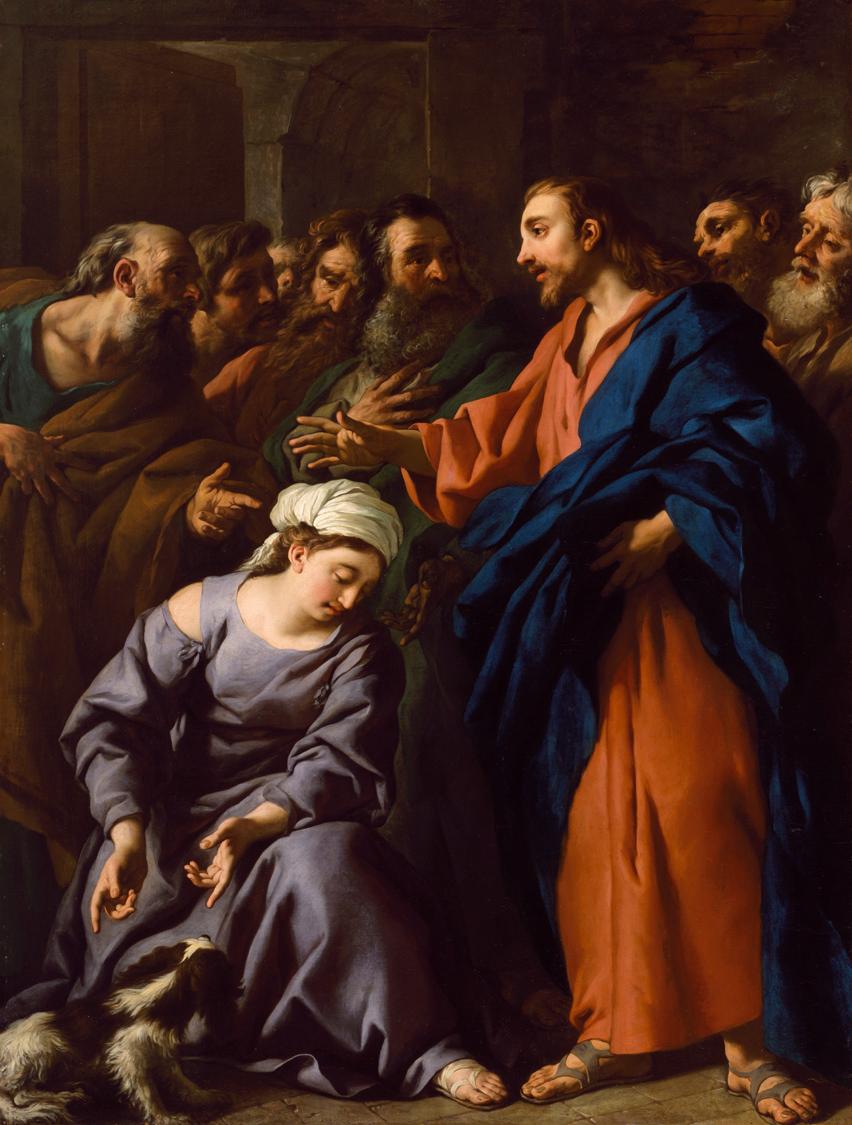
In American movies in the old days you could always tell the good cowboy from the bad cowboy, because the bad cowboy always wore a black hat and the good cowboy always had a white hat, and it was very easy to distinguish good from bad. Unfortunately, we have a habit of doing this in all walks of life. Our friends are the good guys and those people who threaten what we believe in are the bad guys. And we get into a world in which it seems very plain that we can recognize the good guys from the bad guys. The good guys love us, the bad guys don’t. The good guys take advantage of us never, but the bad guys always do. The good guys you can trust, the bad guys you can’t trust. Well, this puts Jesus in a very, very difficult position, if that’s the meaning of this. Why? Because, if you read the gospels very, very carefully, Jesus is much more interested in the bad guys than he is in the good guys. Now, this is a very difficult thing to understand, but it’s true. There is that passage of the woman who was thrown before him, into the temple area, and she’s accused of adultery. And Moses said adulterers – only the women of course – must be executed[1]. And Jesus says a very simple thing: Yes, that’s what the Law says. Okay, he who has no sins at all, he can throw the first stone. And the men are good men. Why? Because they drop their stones and they realize how stupid and unfair and awful it is. So, that’s basically what today’s parable is all about: it is not for us to say who is good and who is bad; who is worthy or who is not, so the thing to carry away is that God looks upon us with human feelings. He sees us as human beings, and always in need of his mercy and compassion; the first of the readings this Sunday talks about this beautifully: “you judge with clemency, and with much lenience you govern us”[2]. So, we are not the good guys or the bad guys. We are the ones who accept His love and try our best to be faithful to Him. We have a serious commitment to him to achieve personal holiness, despite our miseries and mistakes. At the end of the day this is what matters, what gives meaning to our life and helps us to continue on the path • AE

XVI Domingo del Tiempo Ordinario (Ciclo A)


En la parábola de este domingo el Señor habla de cómo están mezclados el trigo y la cizaña, pero él no se queda en ahí, la intención de sus parábolas no es solamente constatar unos hechos; Jesús cuenta esta historia para que entendamos mejor qué es el Reino de los Cielos ¿Qué nos puede enseñar una historia de un campo en el que trigo y cizaña que crecen juntos? La primera enseñanza es que no es competencia humana determinar quién es buena semilla y quién es cizaña; quién es ciudadano del Reino y quién no; eso corresponde al Padre determinarlo, y sólo se pondrá de manifiesto cuando el Padre lo sea todo en todos. Buena cosa es ser bueno, pero cuando el bueno se erige en juez de su hermano, liquida toda su bondad, traiciona al Padre y se convierte en verdugo del prójimo. El bueno de verdad suele ser comprensivo, no lleva cuentas del mal, no juzga, perdona y no condena. En el Reino de los Cielos, por tanto, la justicia está en manos de Dios: Él nos hace justos, Él discierne verdaderamente el corazón de los hombres, Él sabe de qué lado está cada uno. Al hilo de la parábola también podemos plantearnos otra pregunta: ¿por qué estamos tan seguros de que el bien y el mal se identifican plena y perfectamente con unas personas u otras? ¿No es más cierto que, en el fondo, no es que buenos y malos estén mezclados, sino que el bien y el mal crecen a la par en el corazón y en la vida de todos nosotros? No podemos negar es que todos hemos tenido en la vida momentos de ésos en los que, como diría Pablo, hemos visto y aprobado el bien, pero luego hemos obrado el mal[3]. Al parecer, Adolf Hitler estaba sinceramente enamorado de Eva Brawn, y San Agustín, antes de su conversión, tuvo una vida que no se puede presentar precisamente como ejemplar. Entonces, ¿cómo juzgar a los hombres y repartirlos en buenos y malos? ¿Cómo negar la libertad del hombre para cambiar su rumbo en un momento dado? No podemos caer en la simplificación de clasificar al género humano en buenos y malos, porque es radicalmente errónea y sobre todo injusta. El bien y el mal se dan simultáneamente en cada uno de nosotros ¿hacia dónde se inclina nuestra voluntad? ¡Esa es la gran pregunta! Y buena cosa es responderla con honestidad. Hoy podríamos hacerlo en algún momento de la celebración Eucarística • AE


[1] Cfr. John 8:1-11.

[2] WIS 12:13, 16-19.

[3] Cfr. Rom 7, 19-25.


...


Fr. Agustin’s Schedule for July 18-19, 2020.

Sixteenth Sunday in Ordinary Time.


Saturday July 18, 2020.


4.30 p.m. Sacrament of Reconciliation.

@ St. Peter Prince of the Apostles Catholic Church (Confessional)


5.30 p.m. English Mass

@ St. Peter Prince of the Apostles Catholic Church.


Sunday July 19, 2020.


9.00 a.m. English Mass

@ St. Peter Prince of the Apostles Catholic Church.


11.00 a.m. English Mass

@ St. Peter Prince of the Apostles Catholic Church.


5.30 p.m. English Mass

@ St. Peter Prince of the Apostles Catholic Church.

Fifteenth Sunday in Ordinary Time (Cycle A)


Z. González Velázquez, Francis of Assisi giving his cloack to a poor man (1787), 
oil on canvas, Museo del Prado (Madrid). 

In the early part of the Thirteenth Century, Giovanni Franceso Bernardone was headed to a prosperous life as a cloth merchant in the Province of Umbria, Italy.  He was also headed to a life of complete self-gratification. He was a young man who loved every sort of pleasure. But,  Francis, as he preferred to be called, didn’t become a merchant. After spending a year as a military captive in nearby Perugia, Francis decided to change the course of his life, radically change the course of his life.  He wanted to focus on serving God and only serving God.  He saw his status as part of the rising merchant class as blocking his ability to experience Jesus Christ.  He gave up his possessions and his future as a merchant, and embraced poverty.  He begged for food in his native Assisi, and spent his days in prayer. Francis attracted a few like-minded companions who joined him in courting what he called Lady Poverty.  One day Francis went to pray at a rundown old chapel just outside of the city, the chapel of San Damiano. As he was praying before the icon of the crucified Jesus, he heard a voice calling to him three times: “Francis, rebuild my Church.  Francis, rebuild my Church. Francis, rebuild my Church.”  Initially, Francis thought that he and his friends should rebuild the chapel of San Damiano, but as time went on, he realized that he was being called to rebuild Christ’s Church on earth. The message is addressed to us. Can we do this? Can we build the Kingdom of God on earth?  We have available to us that which we need. But are we willing to do something with it? It is there.  It is there for us. There is a lot of it, or to use the biblical terminology, it is abundant. It is the Word of God.  God pours His Word upon us; He drenches us with His Word as though we were in a rainstorm. We want it.  We want the Word of God. He gives us all that we need, the Word.  

We long to make His Kingdom a reality, we groan in labor pains, but longing is not enough.  It is not enough to come off a religious experience and say, “I want to be an integral part of Jesus Christ’s solution to the world.”  It is not enough to say, “I want to be united with Christ.”  It is not enough to say, “I want others to be united to Christ.”  We have to use the spiritual gift of the Word. But sometimes we construct roadblocks to our embrace of the Word. The parable in the Gospel says that sometimes the Divine Sower’s seed falls on the pathways through the fields. There is no union with the Word, it is simply there, and it is lost to the birds of the sky.  Sometimes we refuse to make God’s Word the guide of our lives.  We refuse to delve into what God is calling us to.  We know we can learn about the Lord by studying the Bible, by praying over the scripture, by keeping a union with God, but sometimes we are just too lazy to pray.  We don’t make time for Him, the Love of our lives, and then we become shocked that His Presence has been stolen from us by the birds of the air.  There is a war being waged for the Kingdom of God.  We need to prepare for battle.  We need to pray every day in our homes as well as unite together in the Eucharist at least every week. The parable says that sometimes the seed falls on rocky ground. It does not develop roots.  This part of the parable really cuts us to the core, because it says that the enthusiasm for the Word, the enthusiasm for the Lord, is not good enough.  All those good feelings will die out with time, unless it is far more than feelings we search for. It is not the feelings that matter.  What matters are the actions we take when we are exposed to the Word of God.  If we do not change our lives after our continual encounters with Christ, then our spiritual experiences are merely feelings, moments of fleeting joy. Sometimes the seed falls among the thickets and thorns.  God’s word takes root, but other things take priority in our lives.  All of us have many activities and obligations.  Often, we forget  that our primary responsibility is to Jesus Christ.  We have been given the Word. We cannot allow the concerns around us choke off his Presence within us.  We cannot allow ourselves to become deaf to His Call to rebuild His Church. Sometimes the thickets and thorns are the vices of immoral society.  Drugs, alcohol, porn, other areas of immorality are all thorns that choke our grasp of the Word of God.  When we fight immorality, we are not just avoiding sin, we are allowing God’s Word to grow in the world. But there are times, many times, that God’s seed falls on good soil.  There are many people who care for the Presence of the Lord, who are more concerned with His Kingdom than their own emotional feelings of His Presence.  There are many people who refuse to let anything the world throws at them destroy the mission they have been entrusted with by the Divine Sower. We can be these people, you and I.  We can be the people who  are dedicated to the Kingdom of God.  We can rebuild His Church. We need to be good soil.  We have to cultivate the Presence of the Lord in our lives, and serve God no matter whether we feel His Presence today as we did last week, last month, last year, or whenever we were given the gift of a spiritual high.  We can fight off anything that tries to destroy our determination to live in union with Jesus Christ.   We can be the good soil that returns to the Lord more fruit than we could ever imagine • AE

XV Domingo Ordinario (Ciclo A)

V. Van Gogh, El sembrador (1888), óleo sobre tela, Kröller Museum (Holanda)
Con esta hermosísima parábola del sembrador el Señor nos explica el significado auténtico de la propia misión. Es como si nos dijera: “Sí, yo soy el Mesías, pero no de la manera que ustedes imaginan. No he venido a juzgar, sino a salvar. No he sido invitado a poner en su sitio las cosas, sino a iniciar algo. Mi tarea no es la de hacer las sumas, sino la de dar la señal de partida. Inauguro no el tiempo del juicio, sino el de la paciencia. Mi misión está bajo el signo de la siembra, no de la cosecha”. Por eso el evangelio de hoy hace resaltar la figura del sembrador -Jesús mismo- y su su gesto de sembrar. Mas de uno se ha obstinado en explicar que es la parábola de la confianza en el éxito final. En realidad se trata de poner la confianza en los principios. Lo importante es la siembra, no la cosecha. El Señor nos dice que el Reino es una siembra, y la tarea específica del sembrador es el sembrar. Ni siquiera es importante saber lo que siembra. Con frecuencia nos sentimos angustiados: ¿por qué tanta fatiga desperdiciada? ¿por qué se obtienen unos resultados tan modestos? ¿vale la pena insistir? ¿qué se consigue? ¿para qué tantos esfuerzos, tantos sacrificios, tantas esperanzas vanas? Sí, es la preocupación por los resultados, por sacar las cuentas. 

Es esta la parábola del contraste. Contraste entre las dificultades y el resultado final, entre la aparente derrota y el éxito, entre los principios modestos y los crecimientos grandiosos. Es una preciosa invitación a no quedarse en las apariencias. El éxito ya está presente en los fracasos. La mies ya está comprometida en la siembra. Diría más: la mies es el gesto de sembrar. Aun más. El sembrador no elige el terreno. No decide cuál es el terreno bueno y cuál es el desfavorable, cuál apto y cuál menos apto, cuál del que se puede esperar algo, y cuál por el que no vale la pena esforzarse. El terreno se revela en lo que es, después de la siembra, no antes ¡Ay si todos los cristianos recordásemos esto! Nuestro quehacer no consiste en clasificar los varios tipos de terreno, en trazar el mapa de las posibilidades. Tenemos que arriesgar la palabra por todas partes, sin   olvidar que la semilla, que es la palabra, tiene también el poder de transformar el terreno, puede romper las rocas, abrirse un paso en el camino trillado hacia las profundidades del ser. La palabra es creadora. También del terreno. Basta dejarla obrar. Es la palabra que puede transformar el "corazón de piedra" en "corazón de carne". La semilla se pierde, de verdad, sólo cuando se queda en las manos cerradas de un sembrador "razonable". Que no "sale" para no poner en peligro la Palabra • AE

Fr. Agustin’s Schedule for July 12, 2020.

Fifteenth Sunday in Ordinary Time.
Sunday July 12, 2020.

8.30 a.m. English Mass
@ Our Lady of Grace Catholic Church 
(outdoors Mass)

10.30 a.m. English Mass
@ Our Lady of Grace Catholic Church 
(outdoors Mass)

12.00 p.m. English Mass
@ Our Lady of Grace Catholic Church 
(Main church)